

If your telecallers speak two of the languages your borrowers speak, and you are pricing a voice agent by the minute to cover the rest, this is for you. It is not for lenders who want a dialler to call more numbers.
What does the per-minute rate pay for?
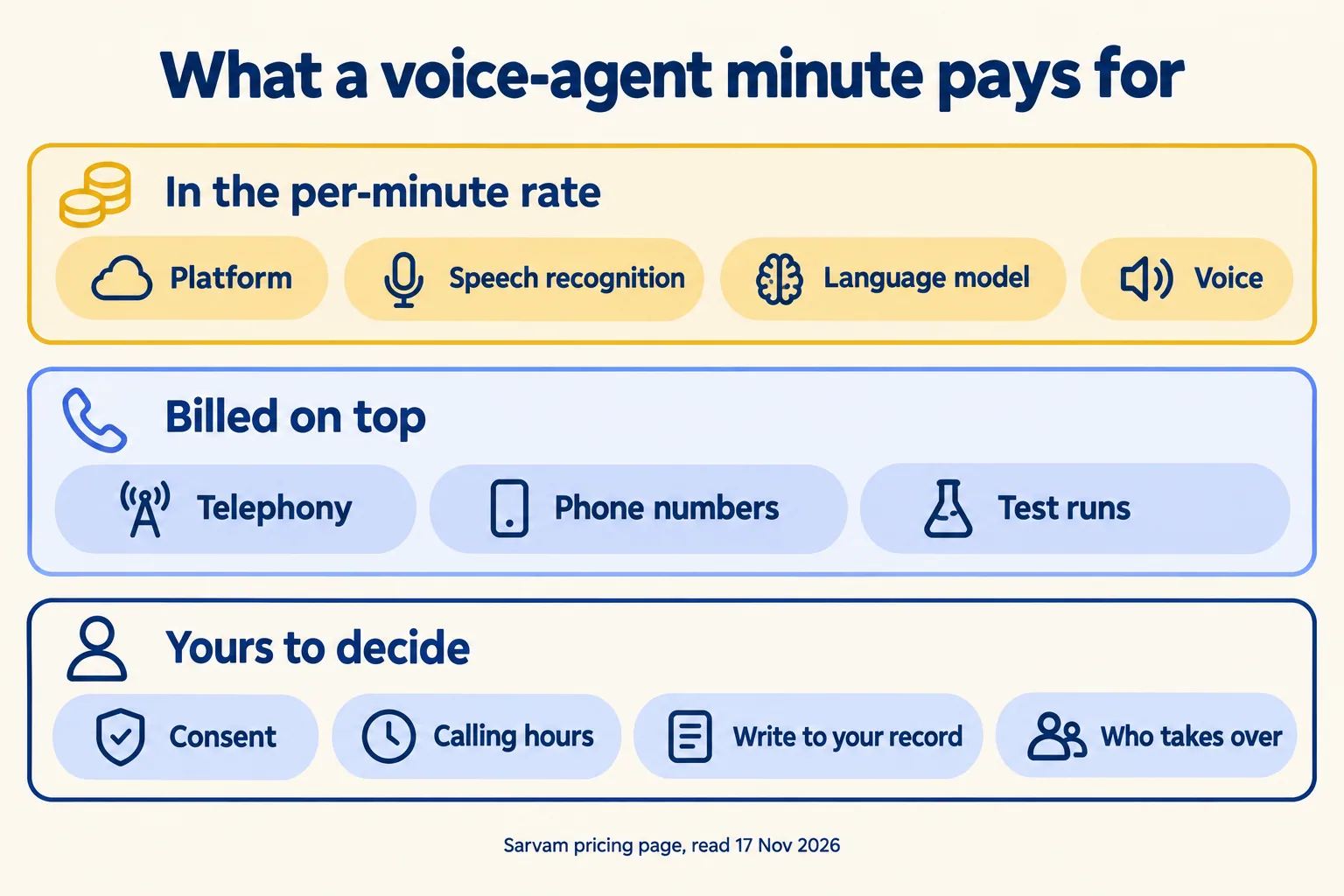
The platform and the models, and not much else. Sarvam's pricing page for its Voice Agents, which we read on 17 November 2026, says the rate "covers the platform that runs your agent and the speech recognition, language, and voice models behind it." There is no separate model or token charge.
Source: Sarvam, Voice Agents pricing. On a paid plan you pay the minimum or your minutes times the rate, whichever is higher, and the minimum comes back as credits.
Three things sit outside the rate. Telephony is billed in 30-second pulses, ₹0.20 a pulse on Sarvam's own telephony, or by your provider if you bring one. A rented number is ₹59 per 30 days. Each simulated test run is ₹2. A call is rounded up to whole 60-second pulses, so a 61-second call is two minutes. A call that is not answered costs nothing.
The table is the part every vendor page shows. It does not tell you which plan you are on. Your calling window does.
Which limit picks your plan?
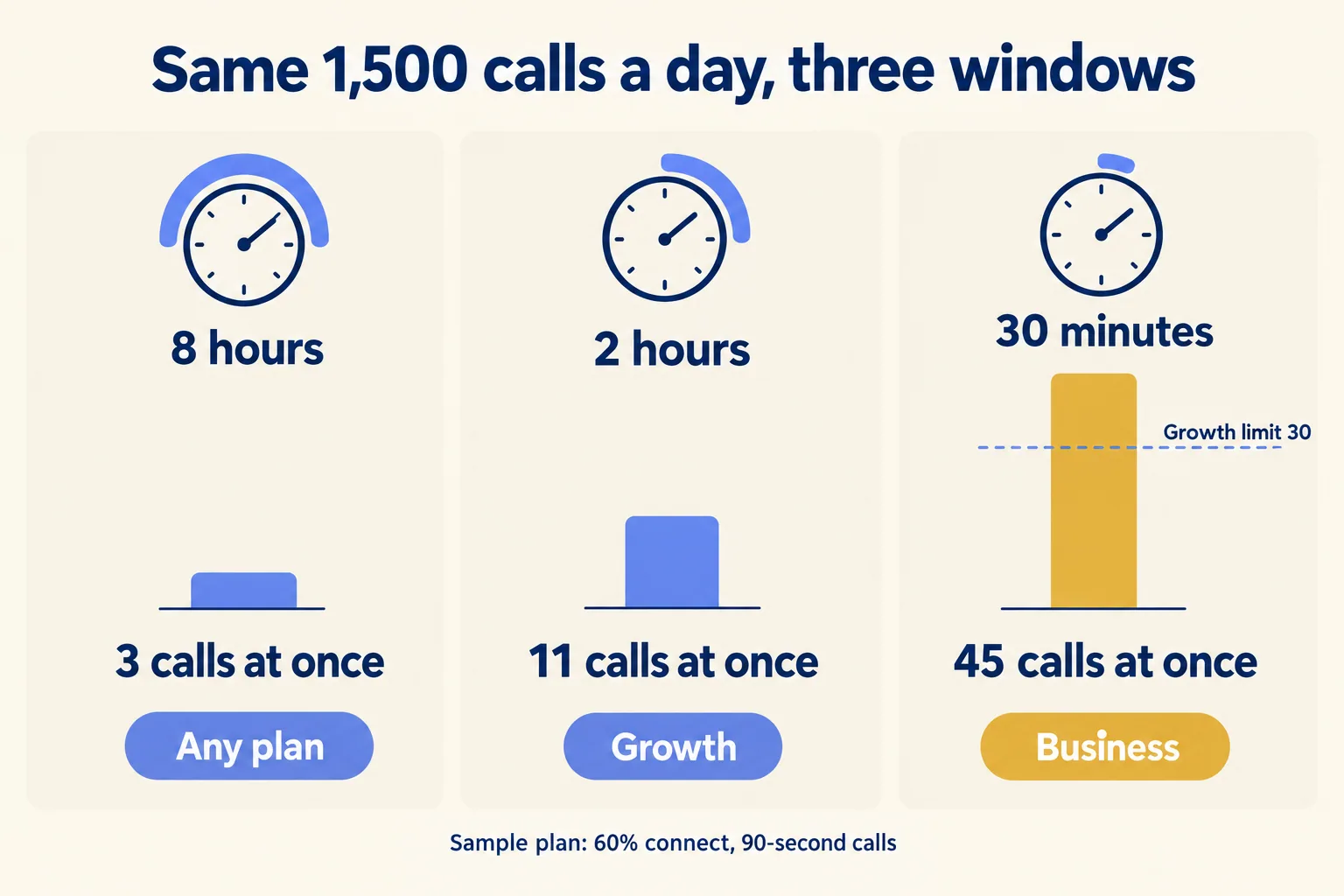
Calls at once. Our rule: size the window you call in before you compare rates. Each Sarvam plan caps how many conversations can be live at the same moment and how many calls can start in a minute, across every campaign and inbound line in your organisation. A call that would go past a limit is rejected.
Sarvam's dialling guide gives the formula: calls at once is roughly attempts per second, times the connect rate, times the average talk time in seconds. Its own example, at the campaign wizard's default of 2 attempts a second, a 60% connect rate and 90-second calls, comes to about 108 conversations live at once. Only the Business plan holds that.
Here is the same arithmetic on a sample plan, labelled as one. A lender sends 1,500 due-date reminders a day, 60% connect, 90 seconds a call. That is about 39,600 billed minutes a month over 22 working days, which Sarvam's table places on Growth.
Same calls, same minutes, about ₹75,000 a month apart, before GST and telephony. On Growth that is about ₹6.30 a connected call; on Sarvam's telephony, a 90-second call adds three 30-second pulses, ₹0.60. Post-bounce calls run longer: double the talk time and you double the calls at once. Reminder teams batch calls into the hours people answer, so the short window is the one to price. Sarvam's guide also tells you to add 20 to 30% headroom, because traffic is bursty and your allowed hours may be shorter than the window you picked.
The limit is more than a billing fact. A builder shipped a Hindi-English voice agent for a fintech and wrote up a postmortem on Reddit. "Single-call latency looked fine on every provider," they wrote. Then the outbound window hit real concurrency, one provider spiked past 800 milliseconds, and "the calls felt dead." Their advice: "Measure at YOUR real concurrency, the demo number is a lie."
What does the minute leave to you?
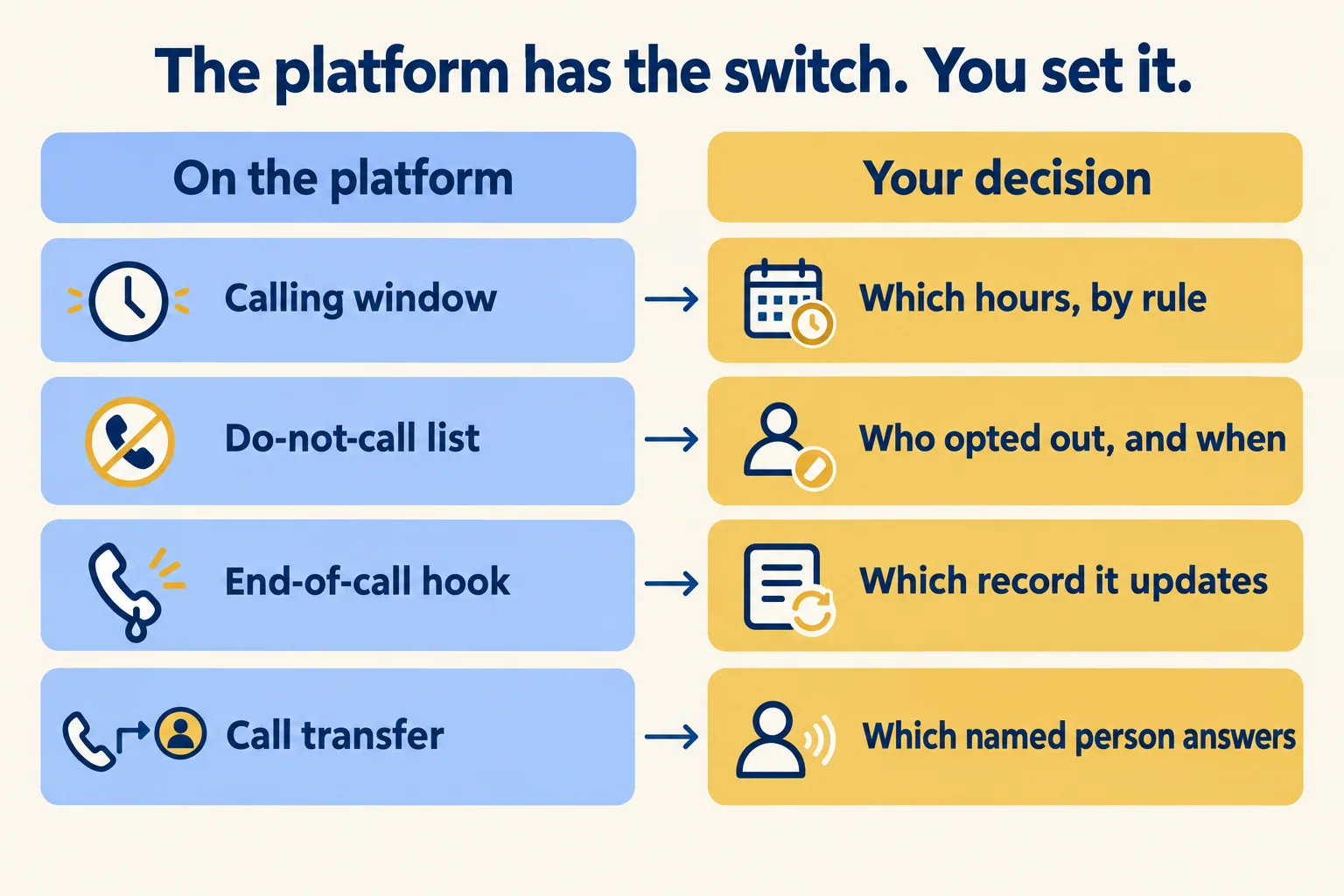
The rules, and the record that you kept them. Sarvam's do-not-disturb page puts it plainly: "Calling compliance is your responsibility. Make sure you have consent to call each contact and that your list respects Do Not Disturb (DND) and any local telemarketing regulations."
The platform gives you good switches. A campaign has allowed days and a "calls allowed between" window. An organisation-wide do-not-disturb list keeps a number out of every campaign. An end-of-call hook pushes the outcome and collected fields to an address you configure. A transfer hands the caller to a phone number. What none of them decides is how each is set, or where the result lands.
One more piece of the job sits outside every rate card: what the agent says out loud. The same postmortem says numbers read as "one thousand four hundred ninety nine rupees" in the middle of a Hindi sentence "tanked our first pilot." The fix was to write amounts, dates and reference numbers the way a person says them before the voice reads them. That is spec work on your scripts, whichever platform speaks.
For lenders, RBI's recovery Directions add a call log and recordings from 1 January 2027. We read the paragraphs in which collection calls keep a person. Your compliance team decides how each applies to your licence.
Platform alone, or a built call flow?
Our decision rule, so you can argue with it.
The platform alone fits when the call is one script, your window fits inside a plan's limits with headroom, and nothing has to be written back except a note someone reads later. A clinic's appointment confirmation, sent through the day, with a spreadsheet export at night, is a fair example.
A built call flow fits when the call must check consent and hours that you own, write an outcome to your system of record, and hand over to a named person with a summary. Most first lending jobs are this one: a promise-to-pay date belongs on the loan, not in a campaign export.
In practice, most first jobs need the platform inside a built flow. The platform runs the voice. The flow decides who gets called, when, what is written down and who picks up when the agent should stop.
Price the build against the calls you lose today: the borrowers nobody on the rota can speak to, the reminders that miss the hours people answer, the outcomes typed in from memory. Not against a telecaller's salary.
How do we test it before the first live call?
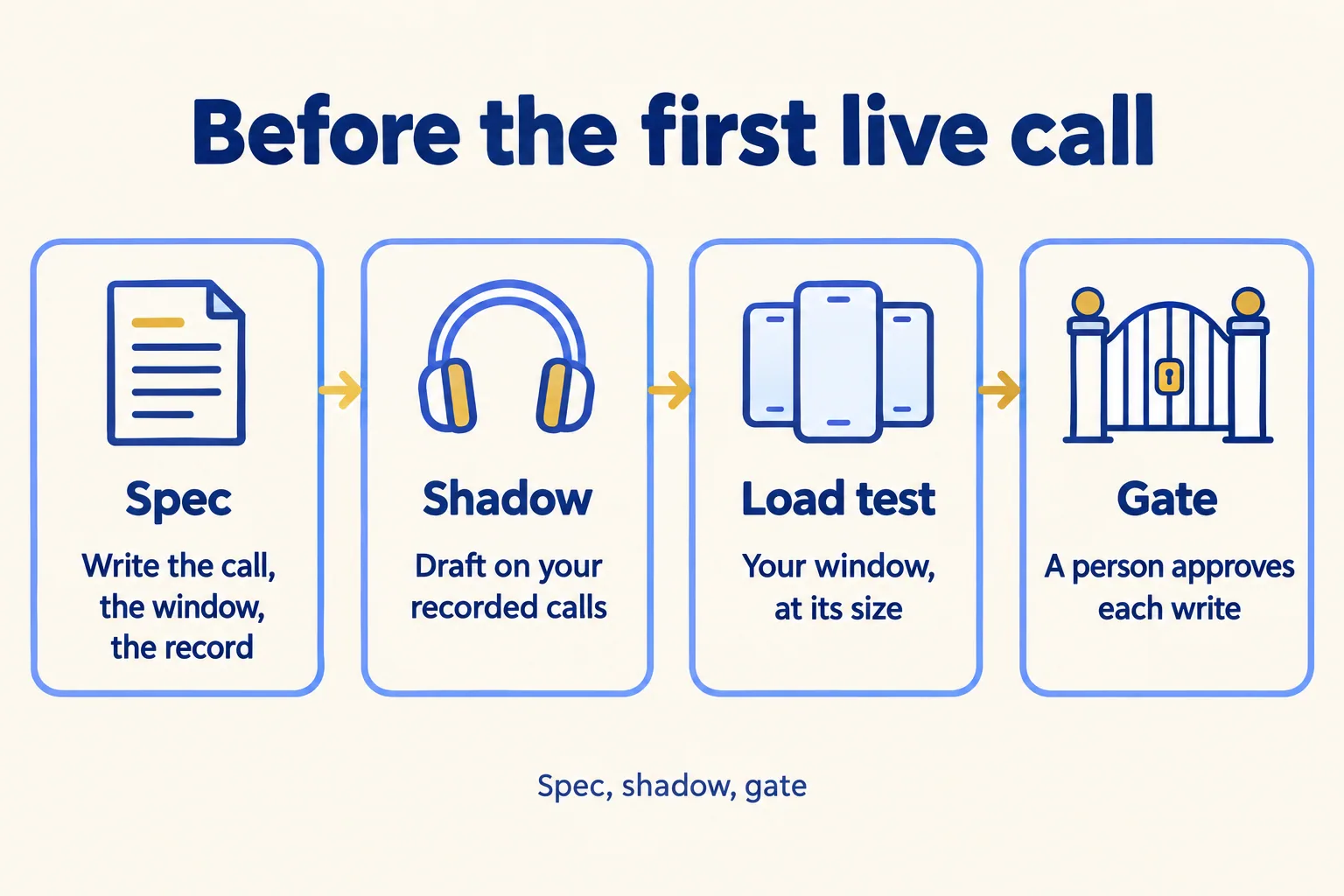
With our method, spec, shadow, gate, and one test the rate card cannot run for you.
- 01Spec: write the call, the calling window, the record it updates and the person who takes over.
- 02Shadow: the agent drafts outcomes on your own recorded calls, and a reviewer who speaks the language marks each one.
- 03Load test: run the flow through the real phone line at your window's size, not one call in a browser.
- 04Gate: a person approves each write to the record until the reviewer's marks say otherwise.
Sarvam's own campaign checklist says the same about the start: launch with a test cohort of 50 to 100 contacts at a low dialling rate, and review quality and connect rates before the full list. The reviewer listens hardest to amounts, dates and reference numbers.
We set the language before any of this. If you have not picked it yet, start with which language your callers answer in.
Who should wait?
Teams with no recorded calls to test on, and lenders who want a dialler to place more calls. We build for consent and calling hours first. Without recordings, start recording with consent for a month and size your window from the log.
Sarvam is a vendor we build on, and you hold the account in your own name. Our First Agent in Production offer starts with one call, one language pair and a reviewer on the exceptions, and the first read is free. Send us the call your team cannot cover today and the system it lands in. We reply in writing within 24 hours.
