
If your guards copy visitors' Emirates ID numbers by hand into a book or a spreadsheet, this is for you. It is not for a site that already runs a chip reader it is happy with.
What goes wrong when a guard types the number?
Two things. The number can be wrong, and the number can end up somewhere you did not intend.
An Emirates ID number is 15 digits, according to the UAE Government portal. A guard typing it between two visitors, with a queue at the door, will sometimes transpose a pair. Nobody sees the mistake until the day someone needs to know who was in the building.
The second problem is the book itself. Bianca Gracias, a managing partner at a Dubai law firm, wrote on LinkedIn in October 2025, as a visitor: "I don't give my EID anymore to security guards and I cringe everytime they write my EID Number in this blue aged log book." In the same post she described a building where the guard "left his book open with all this visitor personal data visible", and said "Anybody could have easily copied this data with a photo." She asked buildings to use "digital sign-ins, QR codes, temporary access passes" instead.
That is how your visitors may see the desk. The cost is more than speed.
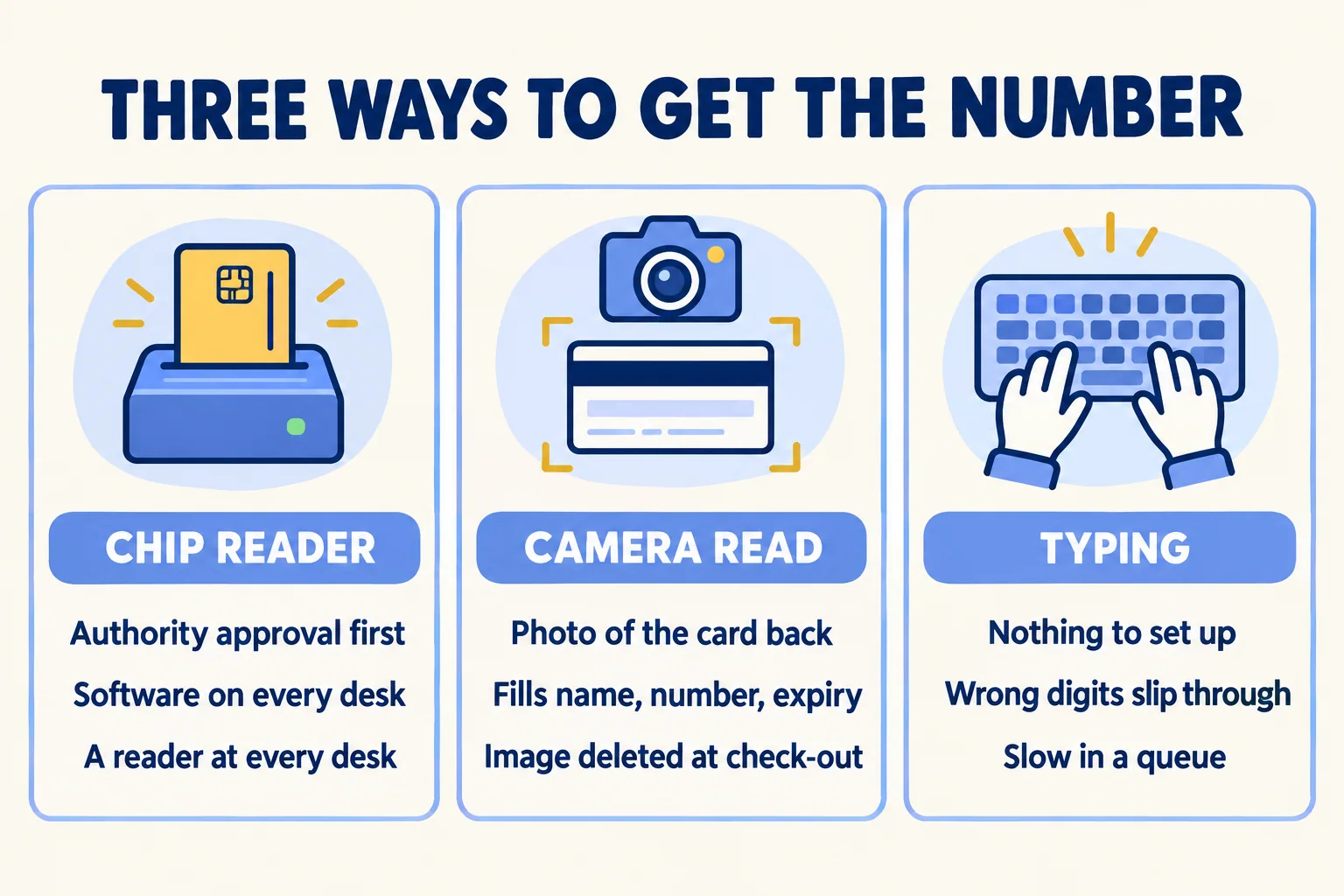
What are the three ways to get the number?
There are three, and each has a different price in time and in permission.
- A chip reader. A smart-card reader at the desk reads the data on the card's chip.
- A camera read. The guard photographs the back of the card with a camera or tablet, and software reads the printed lines and fills the pass.
- Typing. The guard reads the card and types the number.
Our older post on the visitor log book covers whether a book is enough for a tower; this one covers how the number gets onto the record.
One rule applies to all three. The UAE Government portal says it is against the law to seize another person's Emirates ID, and that companies may not withhold the cards of their customers and visitors, but may take the personal data on them. So the question is what you take, how, and what you keep afterwards. For how long to keep it, ask your own legal counsel.
How do you test which one your lobby needs?
Time ten typed entries at your busiest desk, in your busiest hour. Write down the seconds each one takes, and compare each number to the card afterwards.
- If the desk keeps up and every number matches its card, typing is fine for now. Keep it.
- If a queue forms, or even one number is wrong, start with a camera read. It works from the counter's camera or tablet.
- Move to a chip reader only if your site already holds the authority's approval and can run reader software on every desk where visitors check in.
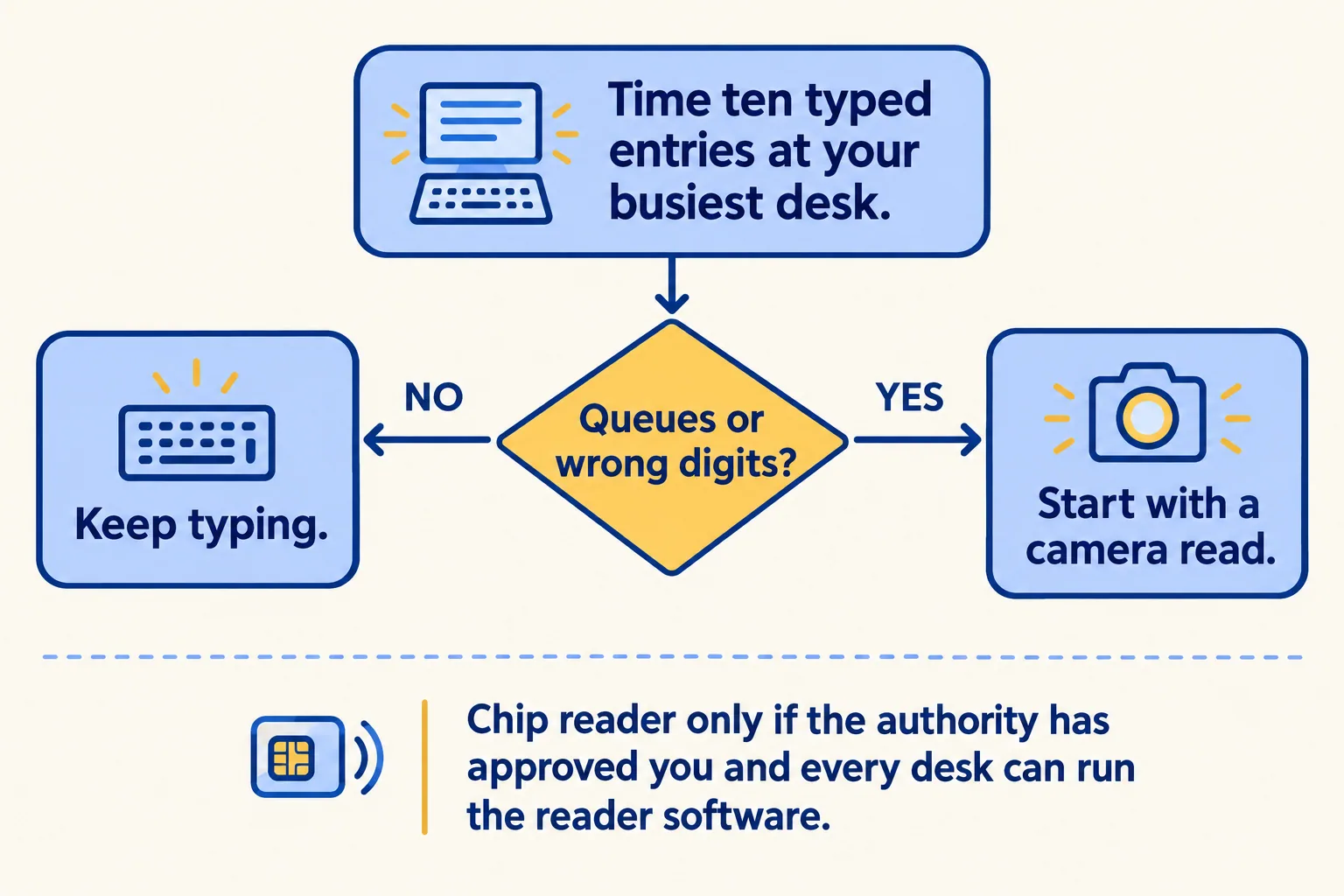
We use this test before we recommend anything. It costs a morning and no software, and it tells you whether you have a speed problem, an accuracy problem or neither.
What does a chip reader ask of you?
More than buying a reader. The chip route starts with the issuing authority.
Its toolkit page describes the Emirates ID SDK toolkit as "a middle ware" that "operates with any PC/SC compatible smart card reader", for "Reading public data" and for "Digital signing, ID card PIN verification". The downloads page says to contact the authority's administrator to get the SDK. The toolkit portal says that credentials are issued on request, with an entity name, a contact person and a mobile number. Both pages were last updated on 11 October 2020, and the toolkit page lists Windows 7 as the newest supported system, while the portal lists SDK 2.0.0 for Windows, iOS and Android. Ask the authority which versions it supports before you plan any desk.
Then there is the desk itself. Facilio, a facilities platform, documents a chip-reader integration that runs a "small background program" on the front-desk computer, which reads the chip locally. Zenoti, a business-management system, lists two supported readers, a helper service that is installed once per workstation by an administrator, and a fault called "Reader Service Not Installed". These are other companies' products, and both pages describe software on each desk and a list of faults to fix. A chip reader is a good fit when your site is ready to support that on every desk.
What does a camera read do, and not do?
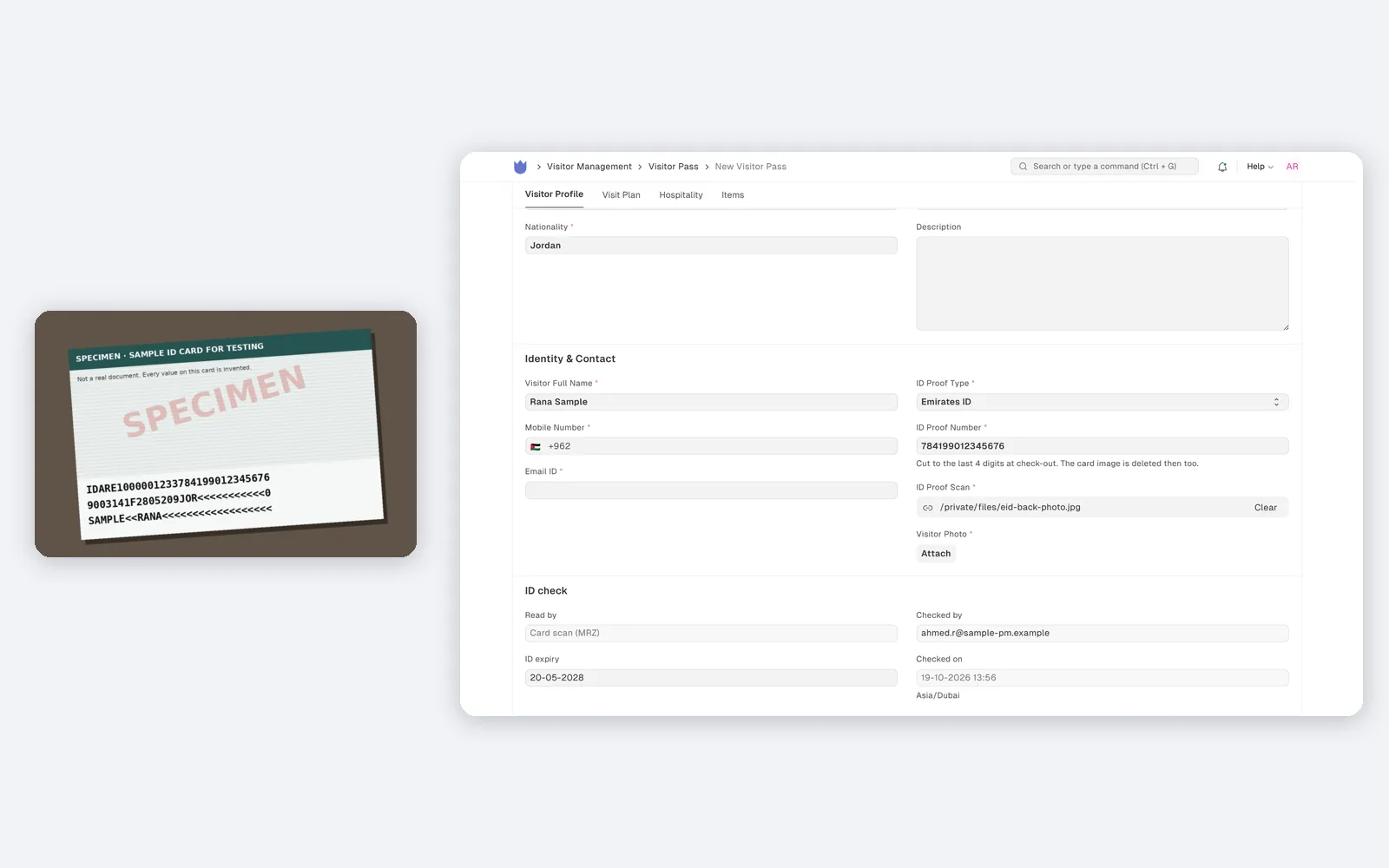
What happens to the photo is the point. When the visitor checks out, the card image is deleted, and the number on the pass and the gate log is masked to its last 4 digits. The expiry, how the card was read, who checked it and when stay on the record. A site can choose to keep images for a set number of days instead. Our method for this is Scan, check, delete.
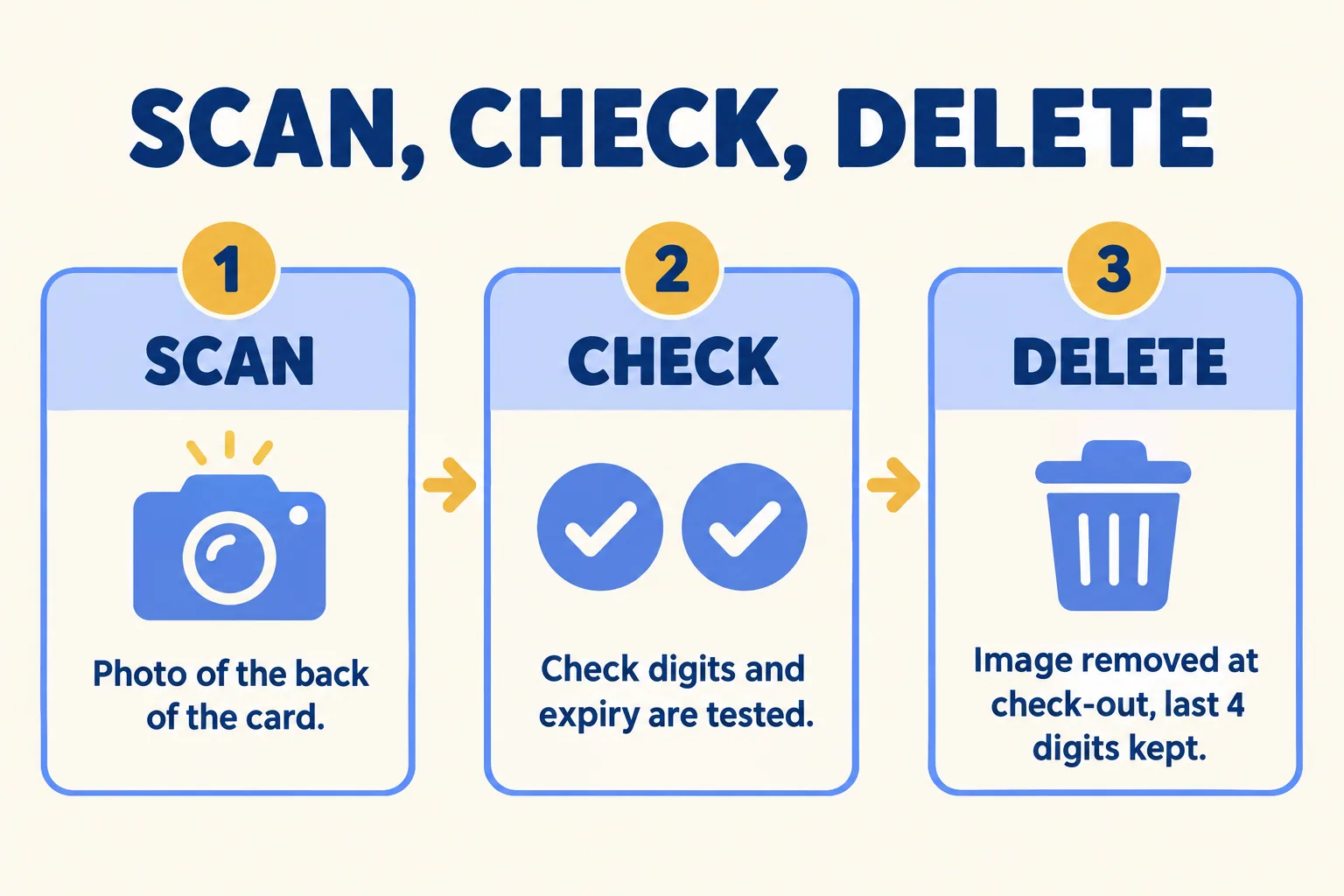
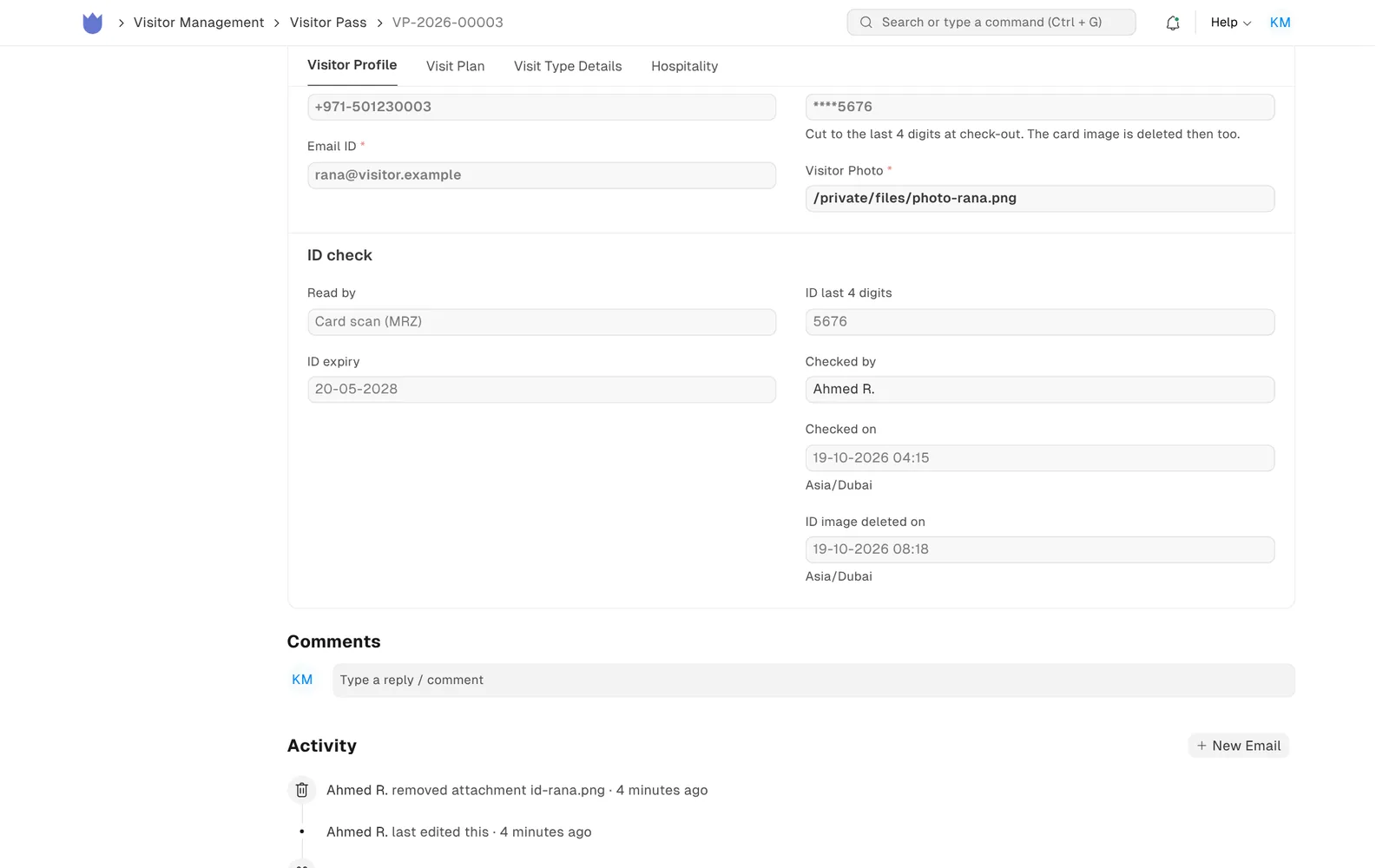
What it does not do: Lobby does not read the chip, and it does not sign visitors in with UAE PASS. Both need approval from the issuing authority, and both are available on request subject to that approval. Iqama, Saudi national ID and other Gulf IDs are added during setup; until then the guard picks the type and types the number, and the app checks its format. Setup includes testing the card read on your camera or tablet and on the cards your desk sees most. If a card will not read, the guard types the number, so the desk never stops.
What would it cost, and what happens first?
You pay per site, per month, and a tower with a lobby and a loading bay counts as one site. Sites 1 to 3 are AED or SAR 1,490 each, 4 to 10 are 1,190, 11 to 30 are 990 and above 30 are 890. Each band applies only to the sites inside it. Every client gets a copy of their own, hosted by us in the UAE or Saudi Arabia, with a minimum of AED or SAR 3,790 a month, so a single tower pays 3,790, not 1,490. Three towers pay 3 x 1,490 = AED 4,470. In your own cloud the minimum is 3,490.
Setup is one time: AED or SAR 7,900 for one site, 14,900 for 2 to 5 sites. Logins for guards and managers are free, and there are no per-visitor or per-scan fees. Cameras, tablets and badge printers are not in the price, because we do not sell hardware. Prices exclude VAT.
If the ten-entries test showed a problem, tell us how many towers or sites you run, their gates and how visitors get in today. We reply with the setup plan and the monthly price per site in AED or SAR. If typing keeps up at your desk, keep it. For the contractor side of the same lobby, read one pass or a daily sign-in for a fit-out crew. Property managers can start at property management, and FM teams at facilities management.
