

What changed, sorted by decision?
Switch on Docs and Slides, hold cloud tasks on customer data until retention and region are settled, and split models by whether you can check the result. That is our call on Anthropic's September updates. We started from a video summary of the updates, then read every claim on Anthropic's own pages. Where the two disagree, the page wins, and the corrections sit below the table.
Disclosure: Mindcat builds client agents on Claude and on OpenAI models. We are not an Anthropic partner or reseller, and Anthropic does not pay us.
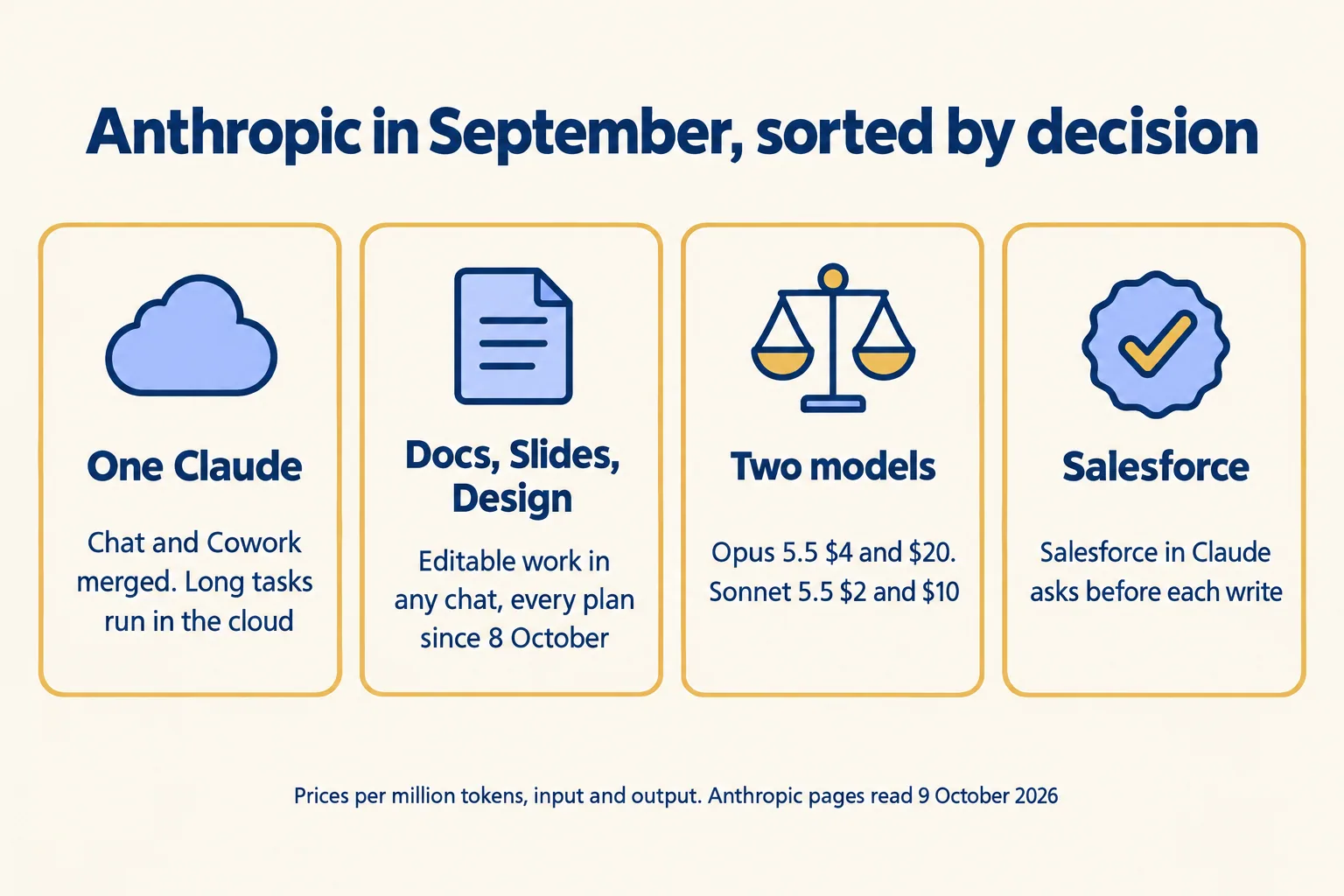
Corrections to the summary we started from, from Anthropic's own pages:
- "Docs, Slides and Design are on all paid plans today." At launch on 16 September they were a beta on paid plans, and Enterprise admins chose when to turn them on. On 8 October Anthropic took the beta label off and put all three on every plan, Free included. Some help pages still say beta.
- "Chat and Cowork are now one Claude." It rolls out in stages, Pro and Max first. On Enterprise the unified experience is a public beta, off until an admin turns it on.
- "Work keeps going after you close the laptop." True for cloud tasks. Tasks that use files or apps on your computer need Claude Desktop open.
- "Anyone can mention Claude in a comment." Anyone with edit access can. Claude acts with the asker's permissions, so a viewer cannot get it to edit a doc.
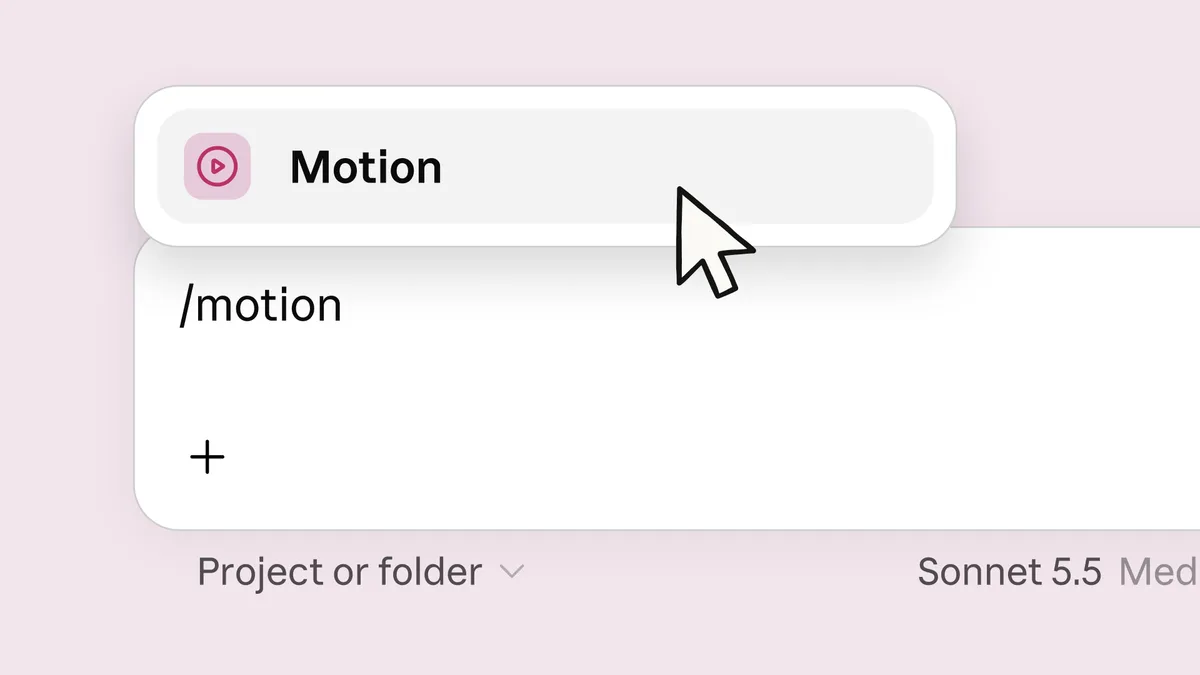
- "Type /slides to skip to it." Anthropic documents
/docsand an "Output" menu with Docs, Slides and Design. We found no Anthropic page that documents/slides. - "Opus 5.5 while you work it out, then Sonnet 5.5." This matches Anthropic's own split. Sonnet 5.5 shipped on 28 September, twelve days after the merge, so the two arrived as separate releases.

What does "runs in the cloud" mean for your data?
It means the work runs on Anthropic's servers in a sandbox, and your retention settings only partly follow it. Anthropic's Enterprise guide says each conversation that needs agentic work gets its own virtual machine. After a few minutes idle the machine stops, its disk is kept as an encrypted snapshot, and the sandbox expires 30 days after it was created.
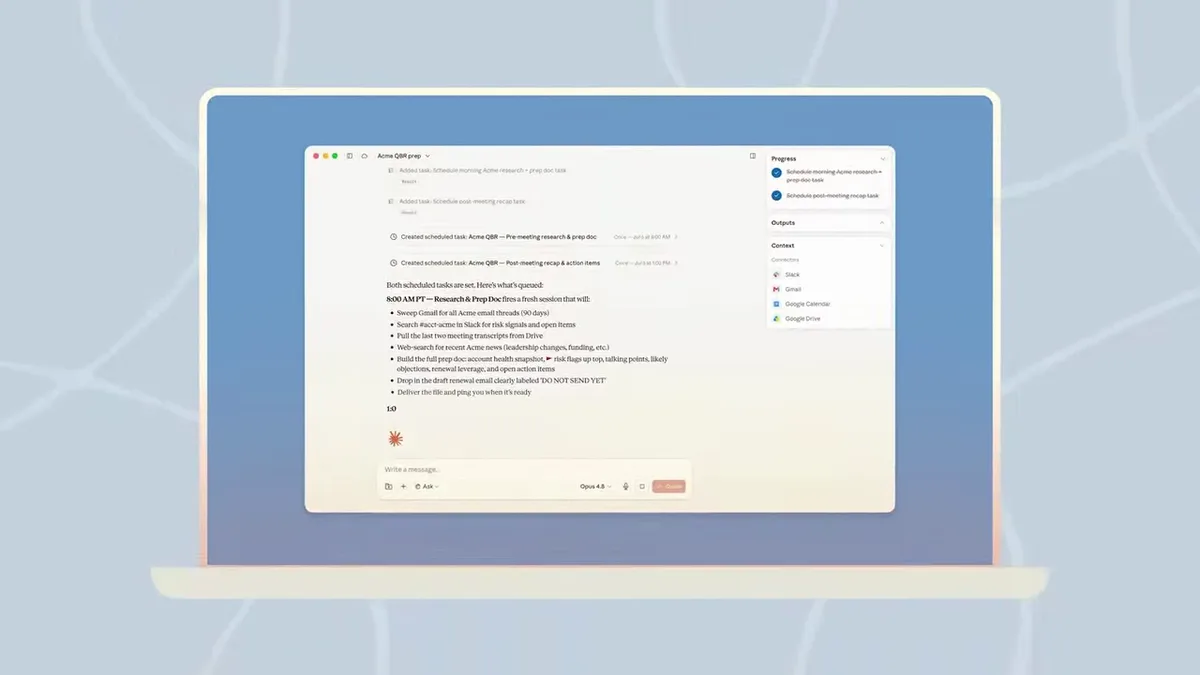
The controls are there, and most are off by default on Enterprise. The unified experience is a setting called "Chat and Cowork unified (beta)". "Run Cowork in the cloud" is on by default for Team and off for Enterprise. Network access from the sandbox is off by default for Enterprise. Connector tokens never enter the sandbox, and an admin can turn off "always allow" so every gated tool call asks again.
The gaps are in retention. Anthropic's pages say:
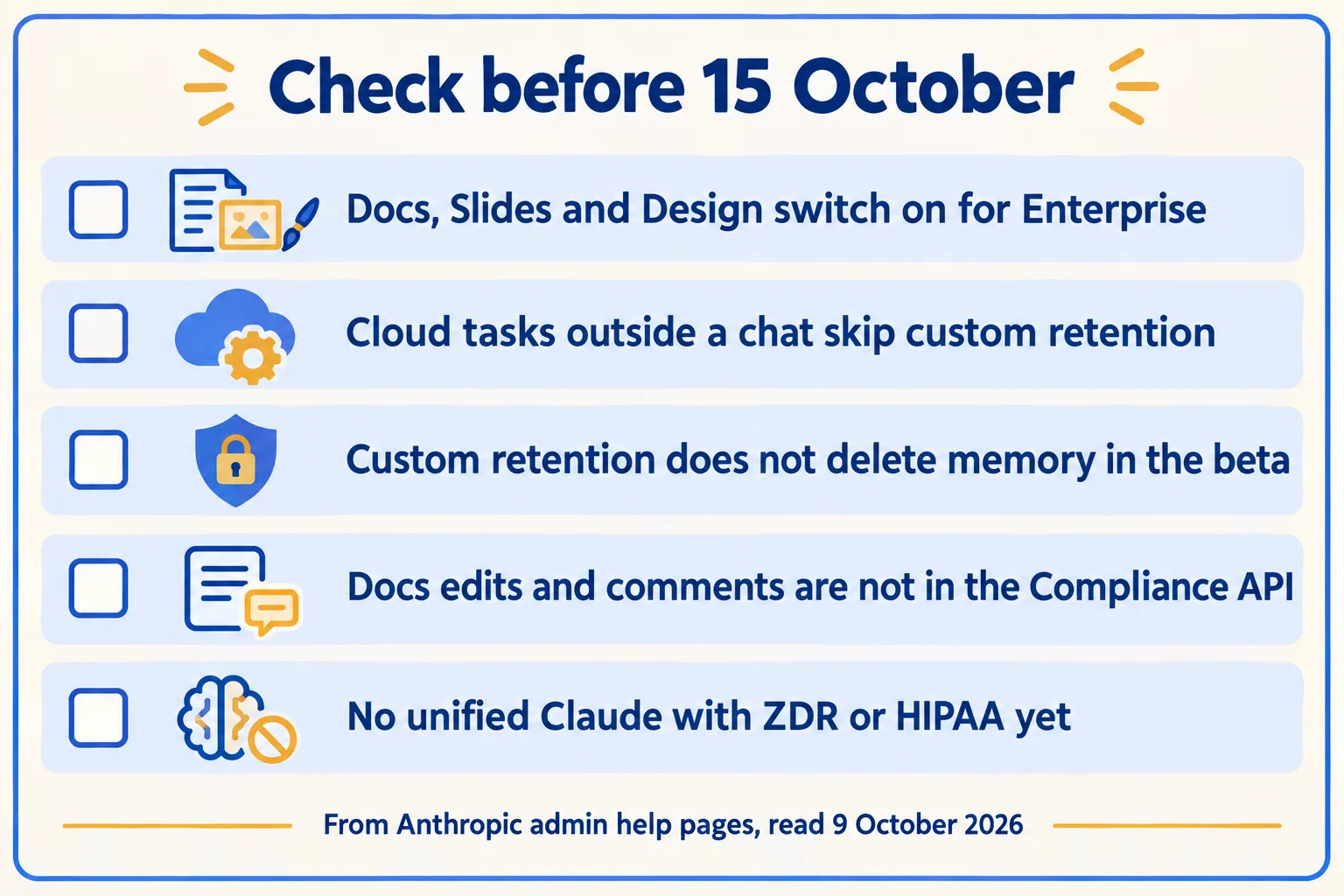
- Conversations, and cloud sessions started from a conversation, follow your custom retention (30-day minimum).
- Cloud sessions a member starts on their own, and scheduled task runs, do not.
- While the unified experience is in beta, custom retention does not delete memory.
- Custom retention does not apply to Claude Design.
- Remote session transcripts in the Compliance API are kept for 6 years unless a user deletes the session.
- Docs edits and comments are not in the Compliance API yet.
Zero data retention does not carry over from the API either. Sonnet 5.5 is offered with zero data retention on the API, but Anthropic says the Team and Enterprise product interfaces are not eligible for it. The unified experience is not available at all to organizations with ZDR, HIPAA-ready configuration or customer-managed keys.
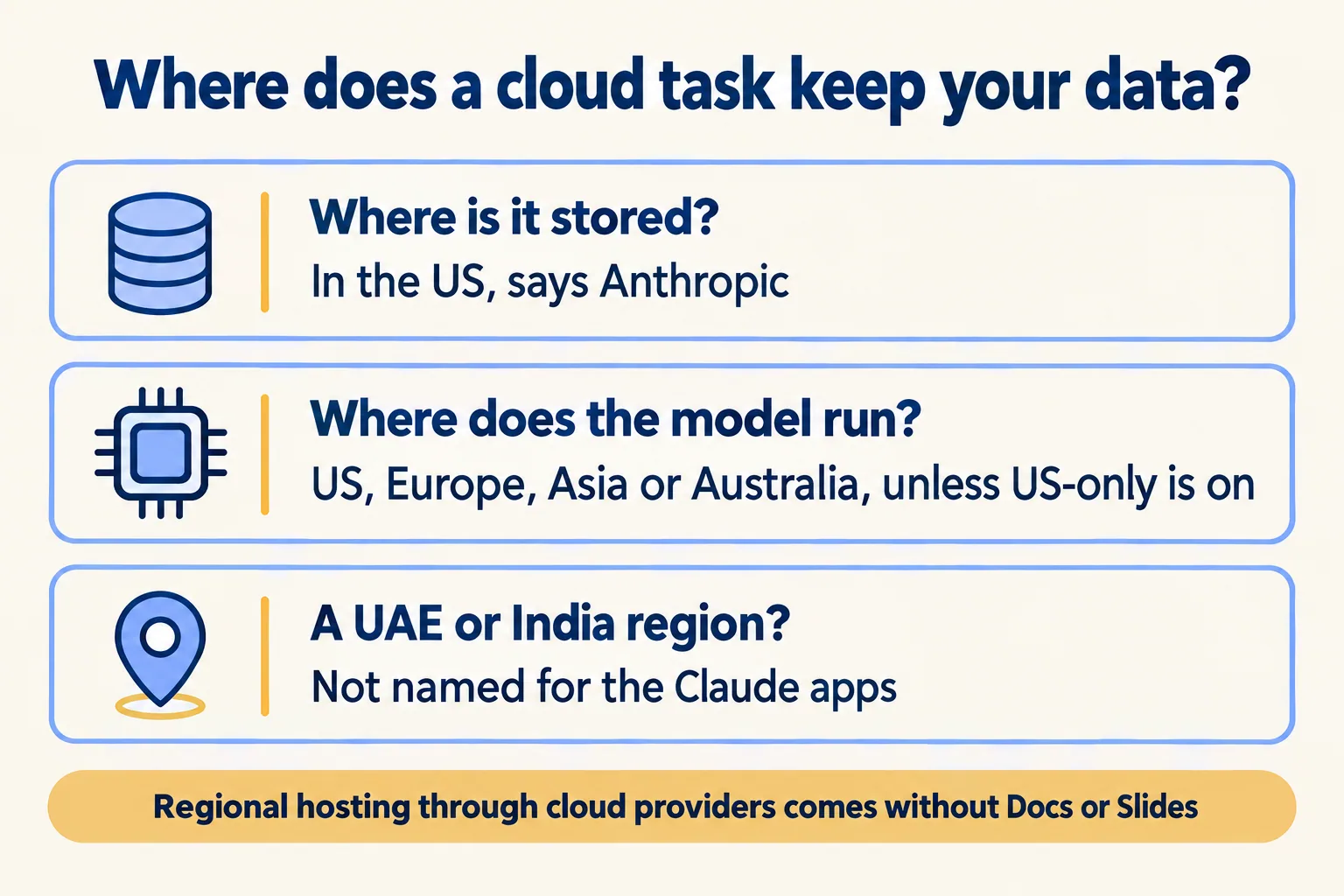
For data that has to stay in the UAE or India, read the region pages closely. Anthropic's privacy page says commercial data is stored in the US, and that it may route traffic to the US, Europe, Asia and Australia unless agreed otherwise. Enterprise admins can switch on US-only inference, at a higher price. Regional residency, with India named, is sold through Amazon Bedrock, Google Cloud and Microsoft Foundry, and Anthropic says artifacts are not available through those platforms. No Anthropic page we read names a UAE region.
What that leaves you with today: use the Claude apps for work you would accept being stored in the US. For a regulated India workload, the regional route is the API through one of those cloud providers, without Docs or Slides. For the UAE, ask your cloud provider and Anthropic which region serves the model you need, and get the answer in writing before customer data goes in.
Which model should run which step?
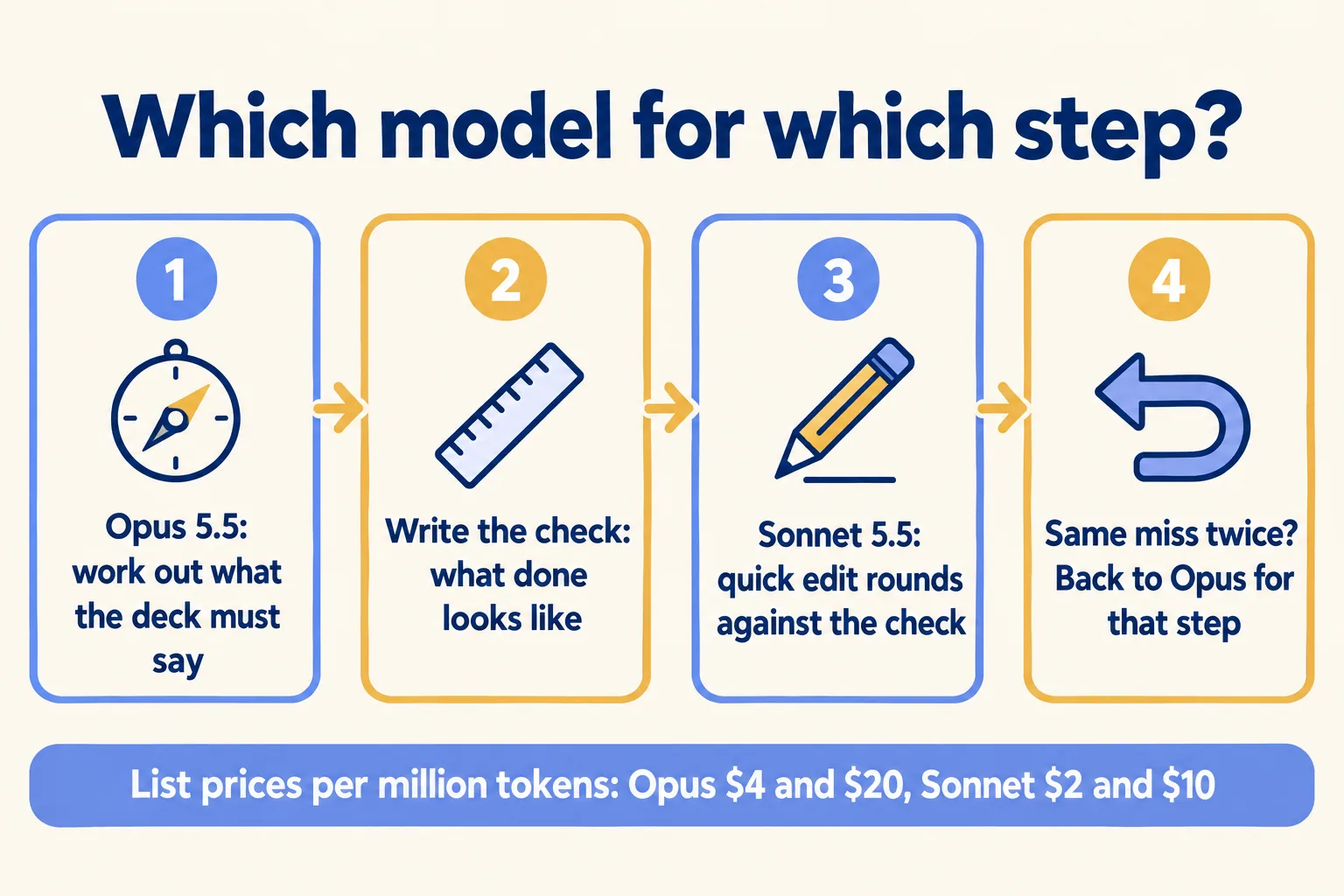
Opus 5.5 for the steps where you are still deciding what to say. Sonnet 5.5 for the steps where you can write down what done looks like and check it. Anthropic draws the same line: Opus for "complex work requiring careful judgment", Sonnet for "well-scoped everyday tasks" and "polished documents, slides, and spreadsheets".
What one deck costs, at list price on the API. These are our assumptions, not a measurement. A first draft reads 60,000 tokens of notes and writes 15,000. Each edit round reads 35,000 cached tokens plus 5,000 new ones and writes 4,000. We leave out cache writes.
- Draft on Opus 5.5: $0.24 in plus $0.30 out, so $0.54.
- One edit round on Opus 5.5: $0.007 cached, $0.02 new, $0.08 out, so about $0.107.
- One edit round on Sonnet 5.5: $0.007 cached, $0.01 new, $0.04 out, so about $0.057.
- Opus draft plus ten Sonnet rounds: about $1.11. Opus throughout: about $1.61.
Cache reads cost the same on both models, so the gap is in new input and output. Either way the model bill for one deck stays under $2. The reviewer's hour costs more than that, so choose the model by whether a round can be checked. In the Claude app you do not pay per token. Both models count against your plan's usage limits.
One detail matters if you build on the API. Anthropic's Opus 5.5 notes say that when a conversation moves from Opus 5.5 to any model other than Fable 5.1 or Mythos 5.1, the turns after the switch run without Opus's earlier reasoning. The messages carry over without the reasoning behind them. So before you switch, put the decisions into the conversation as plain text: the audience, the three points, the numbers that must appear.
The rule we suggest, so you can argue with it. A step is checkable when you can write its test in one sentence, for example "slide 4 shows open pipeline by stage from Monday's Salesforce report, under 30 words". Run checkable steps on Sonnet 5.5. If Sonnet fails the same check twice, send that step back to Opus 5.5. Count rounds and misses per model for two weeks before you make the split a team habit. Anthropic publishes speed against Sonnet 5 ("30%+ faster"), not against Opus 5.5, so time your own rounds.
The same split, judgment step or checkable step, is the one we use when we price each agent step across vendors, OpenAI included, and it sits behind this week's agent stack decisions too.
For agents on the API, the per-deck numbers hide what drives the bill: the share of steps that reaches a person. In the seeded simulation behind that cost breakdown, a CRM-update agent spent $0.0046 a write on models and $0.342 a write in all, because people reviewed about 11% of writes. Those are simulated numbers from stated assumptions, not a client's. A cheaper model that sends more steps to a reviewer costs more in total, so the "same miss twice" trigger is also your cost control. Each send-back adds a round of waiting too, so time it.
Your own share will differ from the simulation. Our approval agent below sent 12 of 40 requests to a person, about 30%, because budget approvals are meant to reach someone. That gap is why we tell you to measure the share on your own flow before you trust anyone's average.
Outputs are editable, and the edit can be narrow. In a doc you highlight text, choose "Edit with Claude" and type the change, and Anthropic says Claude edits where you marked it. Decks can be edited slide by slide, and a design element can be selected and moved by hand.
What changes for a team on Slack and Salesforce?
The pipeline report can now start in Salesforce, gather context from Slack and come back as a doc and a deck in one conversation. The write back to Salesforce is still the risk, and Anthropic's own defaults treat it that way.
- Salesforce in Claude (beta on paid plans) brings 37 sales skills under each seller's own Salesforce permissions. By default Claude asks the seller to approve each change before it is written, and Salesforce stays the system of record. An admin requests access through AgentExchange and connects the org once.
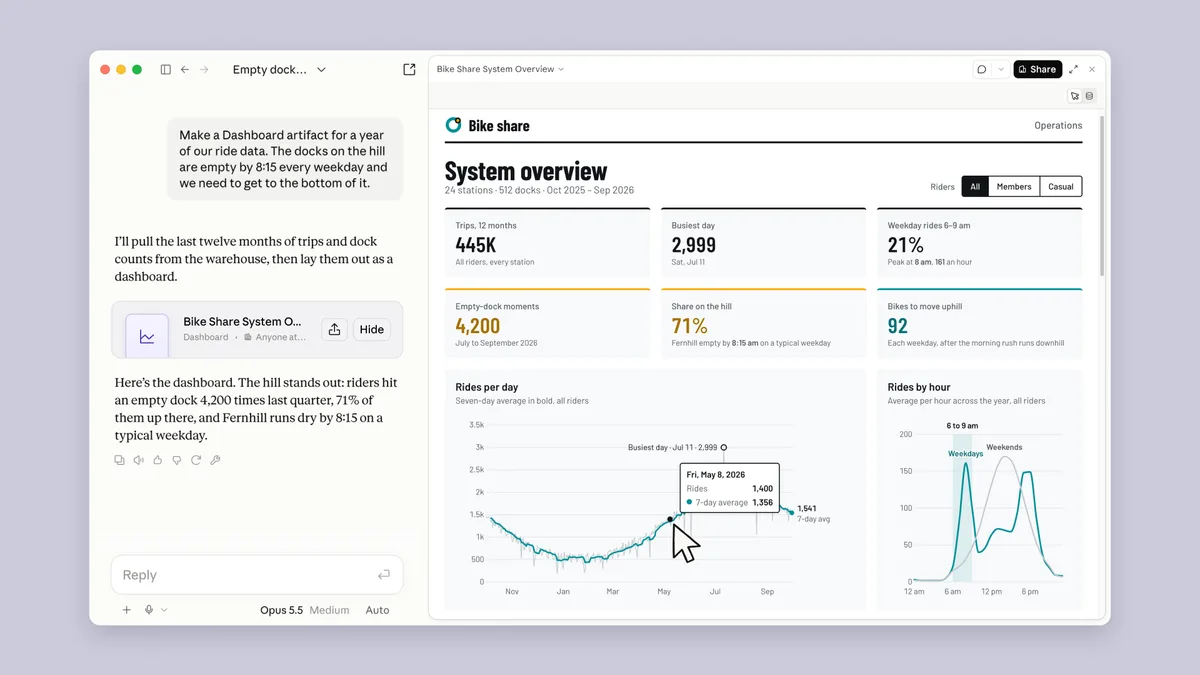
- Claude Dashboards (beta on paid plans) can build a dashboard of your Salesforce opportunities, and each number shows the query behind it.
- Charts in Claude Docs do not refresh themselves, even when the data comes from Salesforce. Ask Claude to pull the latest data before the meeting.
- Claude Tag replaced the Claude app in Slack on 3 August. It is a beta on Team and Enterprise, works under its own identity, and channel work is billed to your organization. An Owner chooses the channels and tools.
We run our own approvals the same way. A request lives in a Slack List until the last approval, and only then writes back to Salesforce. It goes to the submitter's manager, then the department head, then finance and the CEO when it touches budget. Over six months, one of our approval agents took 40 requests, and 12 of them reached a person. The slow part was writing down the exceptions: days of discussion per flow, then about a day to build each one. Contractors, outside approvers, outside reviews and audit were all added after go-live. We tested what happens when an approval does not bind to the exact action in a $20 approval that ran as $2,000.
So keep "approve each change" on in Salesforce in Claude until someone owns the exceptions queue. The same goes for the permission mode in the app: Manual asks before each action and is the default, and Auto runs safety checks instead of asking you. Enterprise admins can remove Auto.
Where does it stop?
These limits come from Anthropic's own pages, read on 9 October:
- Claude Docs has no version history and no comment-only access. Its edits and comments are not in the Compliance API.
- On Team and Enterprise, a doc cannot be shared outside your organization. Slides and designs can, if your admin allows it.
- The unified experience is not available to organizations with ZDR, HIPAA-ready configuration or customer-managed keys. Docs, Slides and Design are outside the HIPAA Business Associate Agreement.
- Incognito chats open in the old experience, so they cannot create files.
- Standalone Claude Design at claude.ai/design closes on 14 December. Chats and comments there do not move over, so save them first.
- Artifacts are not available on Bedrock, Google Cloud or Foundry, which is where regional residency lives.
What should your team test this month?
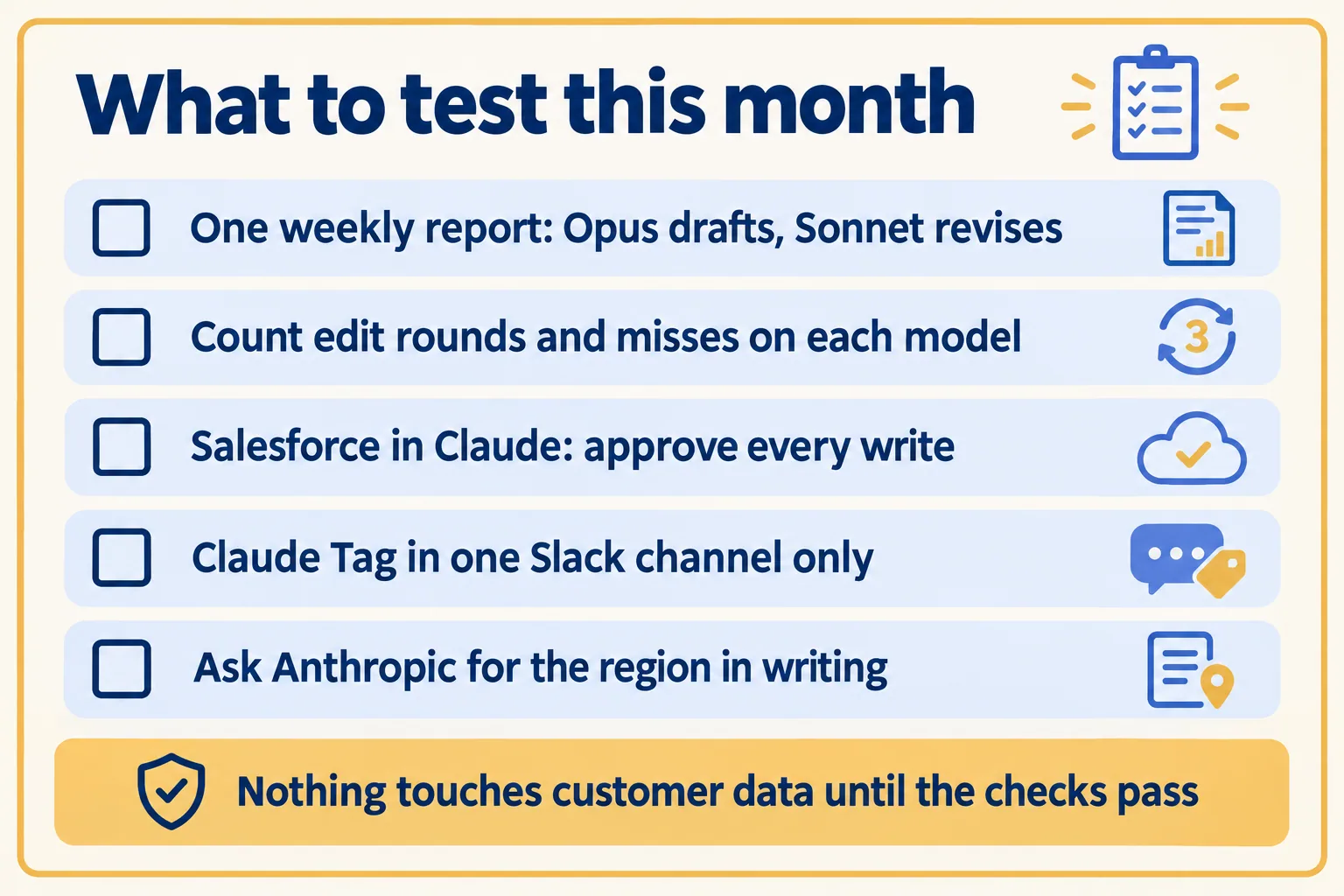
One recurring report, on two models, with the write path closed. Shivanath has put 200+ agents into production, and the method we use is Spec, shadow, gate: write the step down, run it next to today's version, then put a person on the write.
- 01Before 15 October, decide your Enterprise defaults for Docs, Slides and Design, and who may use cloud tasks.
- 02Run one weekly report for two weeks: Opus 5.5 drafts, Sonnet 5.5 revises against a written check. Count rounds and misses.
- 03Install Salesforce in Claude for one sales team with approve-each-change on. Log every write a person rejects.
- 04Add Claude Tag to one Slack channel only, and read its Activity page weekly.
- 05Ask Anthropic in writing where your data is stored and processed, and keep customer data out of cloud tasks until it answers.
What to own and what to rent: rent the models and the app. Own the written brief, the checks each round must pass, and the path that writes to Salesforce. Those are what let you move to another model, or another vendor, without starting over. Docs export to Word, PDF, Markdown and Google Docs, and decks to PowerPoint and PDF, so export anything you need to keep. If your team runs on Microsoft 365 rather than Slack, Anthropic lists Microsoft 365 among the apps Claude can use during a task, and its Claude for PowerPoint add-in works inside PowerPoint itself. If your team already lives in Slack, our Claude in Slack use case shows the shared-teammate pattern.
